Urban and Community Forestry:
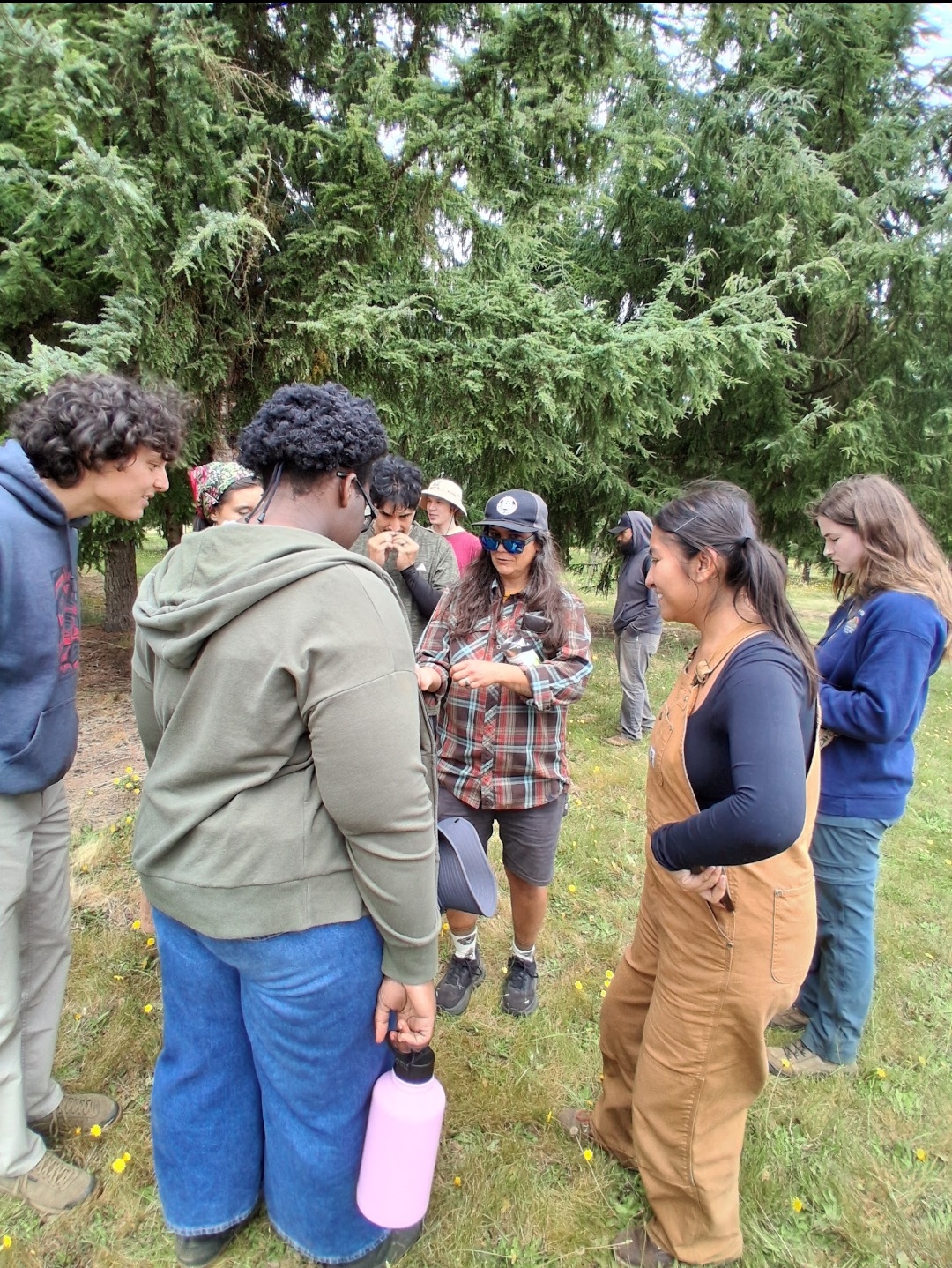
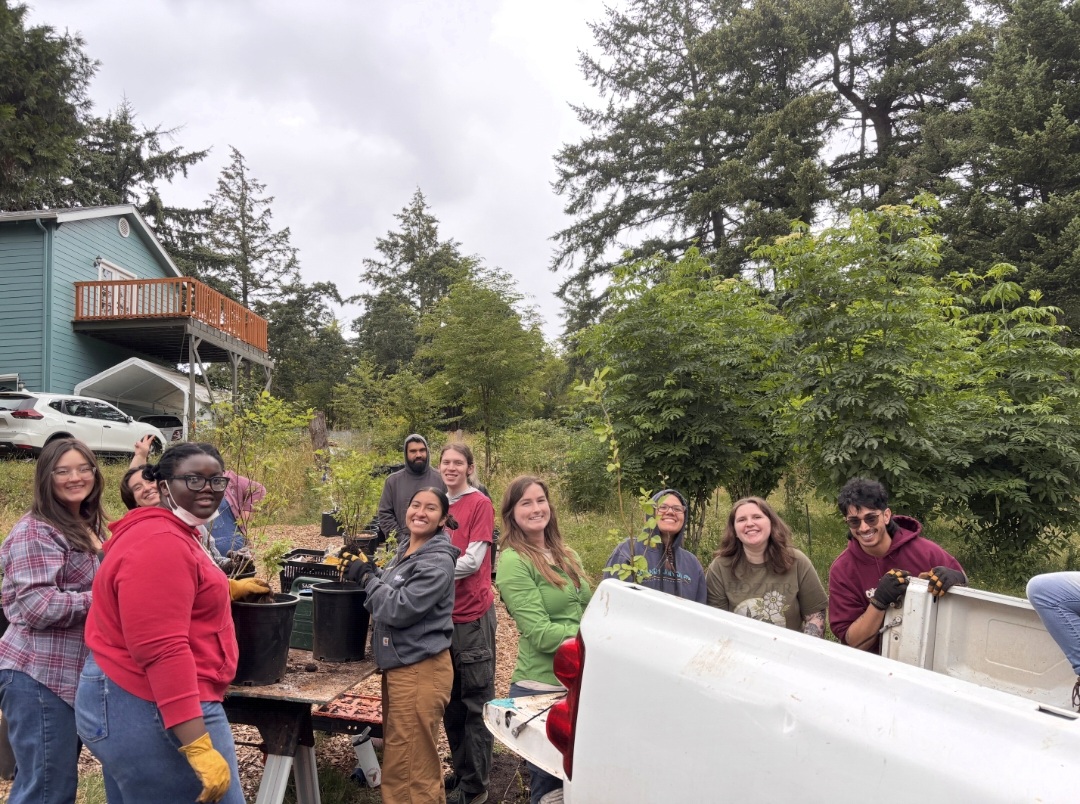
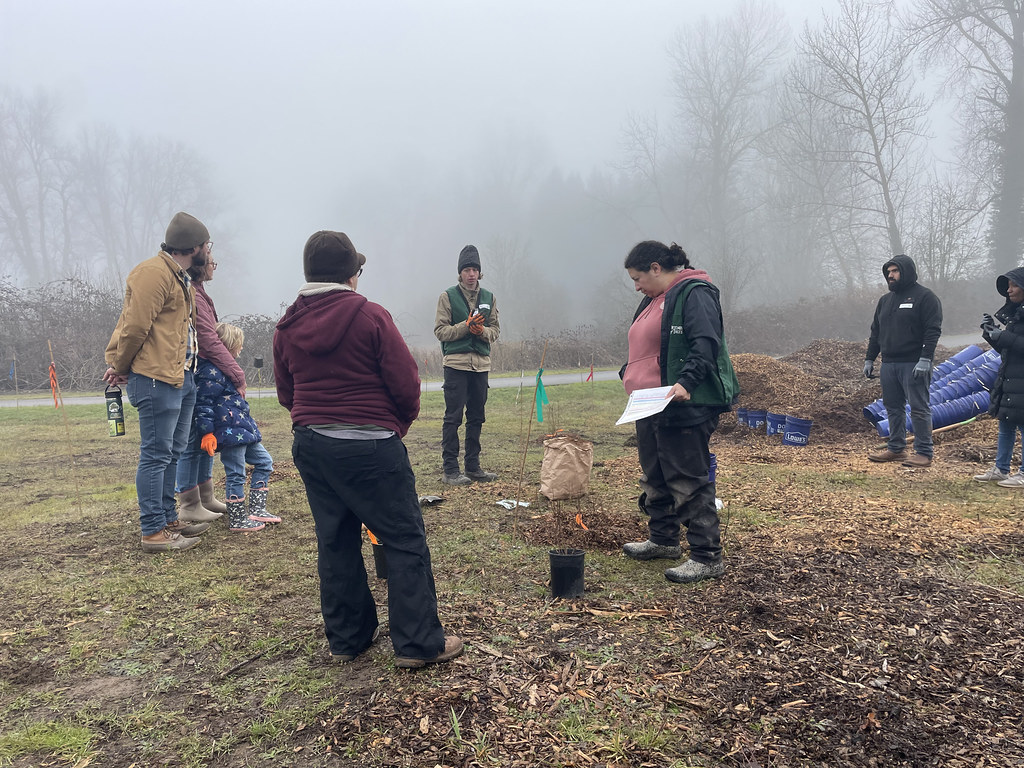
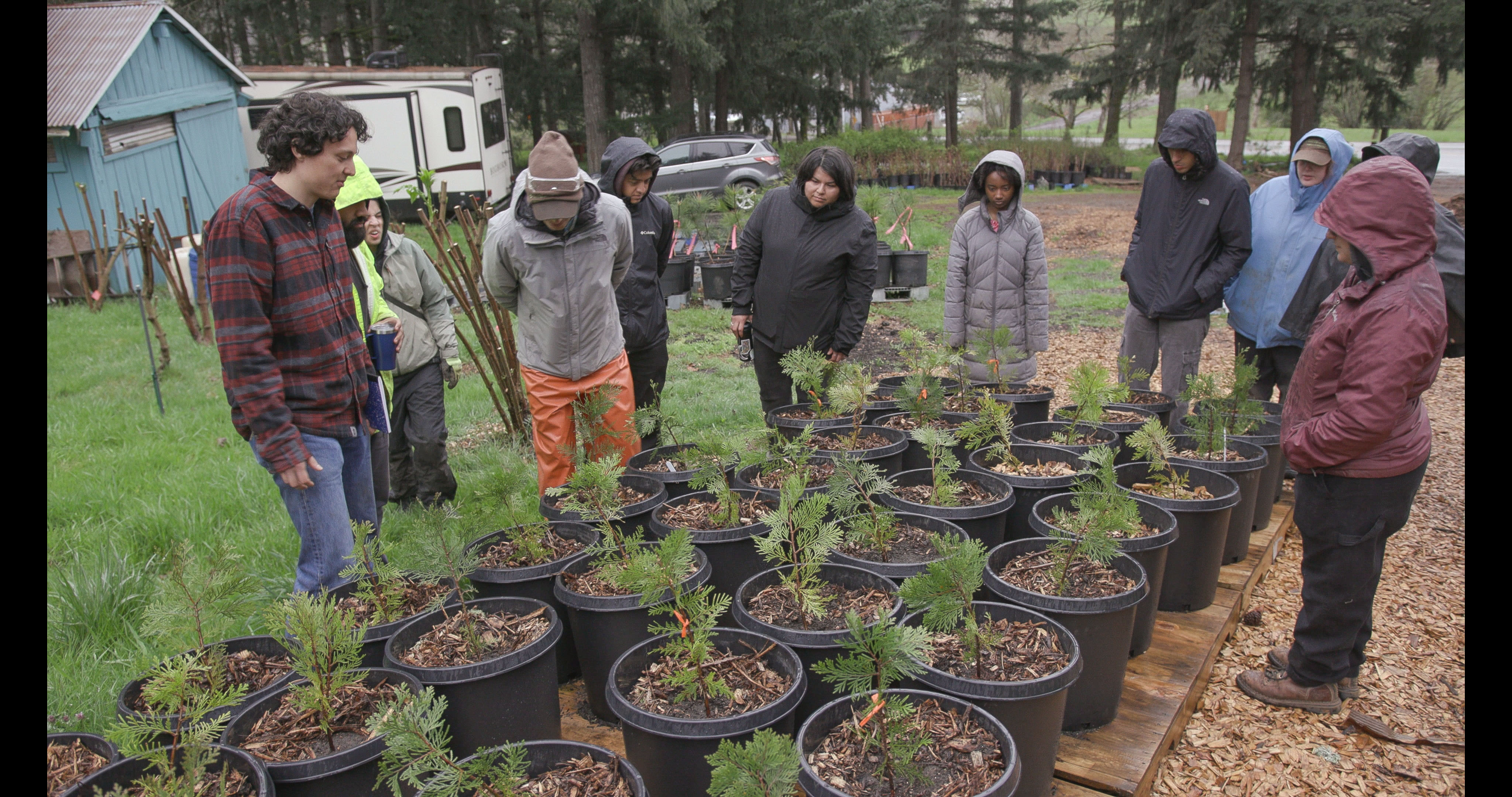
Elderberry Wisdom Farm is partnering with Oregon Department of Forestry: Urban and Community Forestry to accomplish its Urban Forestry Workforce Development Initiative. EWF is providing cohorts of TEK Interns with opportunities to cultivate, plant and maintain tree and shrub species Native to the Willamette Valley. Interns are learning the ins and outs of tree planting, root ball prep and long-term maintenance to ensure lasting positive effects of tree canopies in neighborhoods with the most need.
Interns will also gain experience in Salem’s Title 1 elementary, middle and high school classrooms by co-teaching with science teachers using culturally tailored lesson plans that integrate Traditional Ecological Knowledge and climate adaptation principles and practices. Students will begin to plant and maintain tree canopies in schoolyards using climate resilient tree and plant species native to the Willamette Valley. They will also provide mentoring support that inspires students to explore conservation career pathways and choose careers in environmental stewardship. This helps EWF continue to engage the next generation of youth to.
Training is provided by EWF’s Urban Forestry Coordinator, David Mora-Flores, and Soul Reed, Urban Forestry Assistant along with Native Plant Nursery Coordinator Joaquin Ocana. They are working at two of their Native American Plant Nursery sites where interns learn to germinate and cultivate containerized trees and companion plants for the project. At least 1000 climate resilient tree species native to the local ecosystem along with Native shrub and pollinator species will eventually be provided to schools through this project.
Mora-Flores and Reed have dedicated months of outreach to school administrators, educators and groundskeepers within the Salem Keizer School District, As the project gains traction, people can expect to see tree plantings, community events, and neighborhood involvement at multiple locations.
EWF is also supporting the City of Salem, Oregon which launched a community-driven climate heat-mapping study to pinpoint urban heat islands, identify vulnerable hotspots, and guide future tree-canopy and green-space investments. This will help to reduce the impact of the urban heat island effect in vulnerable neighborhoods. Two EWF teams have signed up to assist as Street Heat Scientists. They will drive along designated routes with specialized mobile sensors to measure temperatures several times in a day. This is helping to train the 2026 Summer internship team about heat mapping and data collection within the city, as they begin to plan and plant native tree canopies in those sites most in need of development. The team is starting in schoolyards but also including low-tree canopy neighborhoods, city parks and natural areas through 2028.
Community consultations will include residents of Salem’s low-canopy neighborhoods in the planning process along with EWF's other partners: Oregon Department of Forestry: Urban and Community Forestry Program, City of Salem, Friends of Trees, Marion Soil and Water Conservation District and partnering schools. Outreach includes sharing successes and lessons learned with the broader community plus UCF networks.