

Autumn at Elderberry Wisdom Farm
- Joaquin Ocana

- Dec 19, 2025
- 2 min read
Joaquin Ocana (Kaqchikel Peoples),
Native Plant Nursery Coordinator
Dear readers,
As we reach the end of our fall internship and prepare for our first Winter TEK Internship, we have been focusing on 2026 expansion of our Native American Plant Nursery and learning from our partners about native plant nursery development.

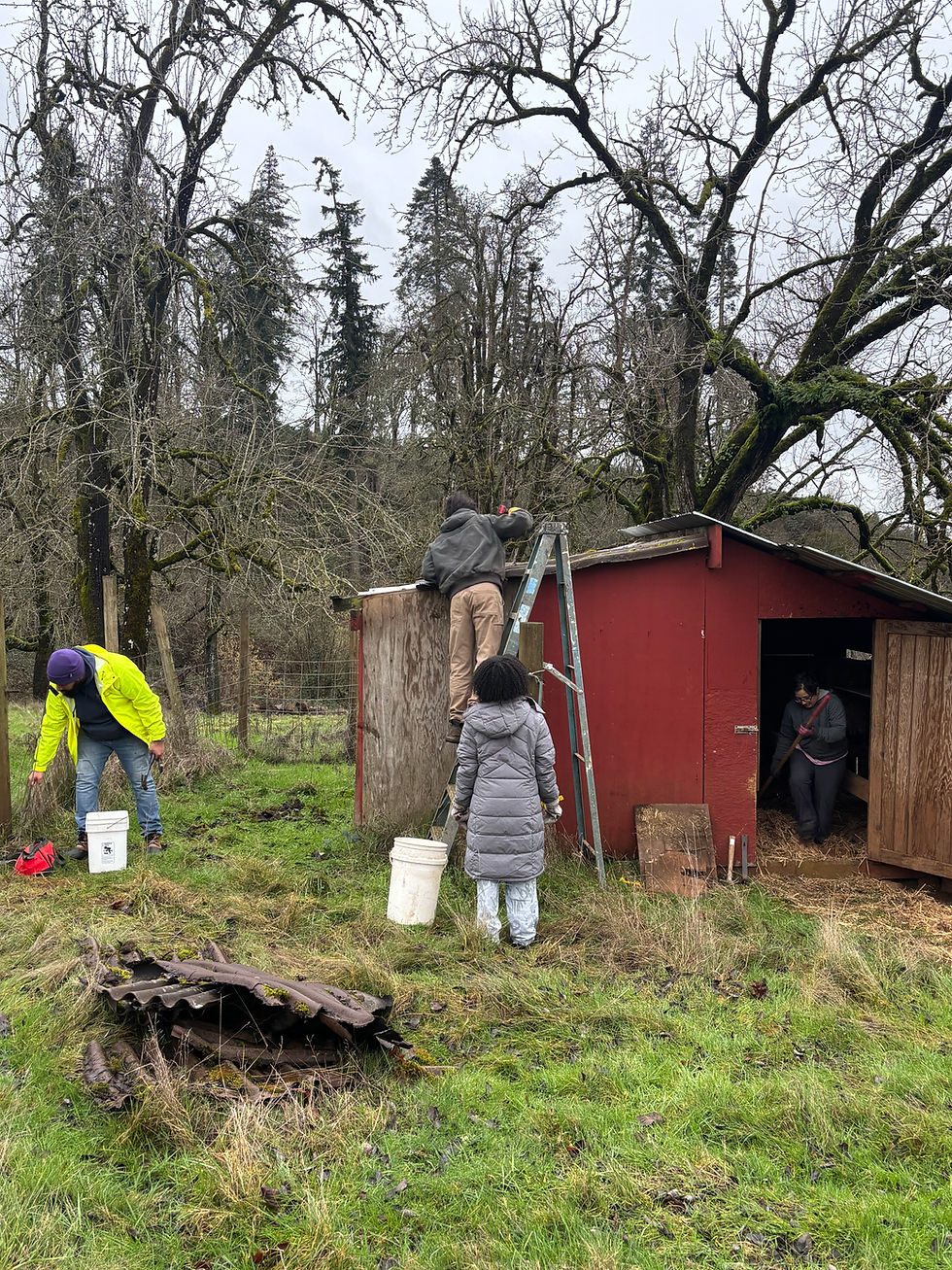
One of the biggest issues is finding enough space to grow the increasing number of native tree and plant species on our two acre farm along with the two acre easement. This month we worked with our fall cohort to clear new space and expand our growing areas by the greenhouse. It required removing an old trailer, clearing invasives and burning a pile of old wood in front of the barn. We prepared the ground by laying down cardboard and cedar wood chips and then placing pallets on top to keep our plants healthy and ensure protection from disease. We repotted and are now growing a few hundred extra Incense cedar and Oregon white oak in containers in this new spot.
We have also been discussing assisted migration with our partners. For those unfamiliar with the term, assisted migration refers to the intentional dispersal/relocation of a species outside its native range based on future climate and habitat predictions. Our goal is to support adaptation in collaboration with partners whose policies are helping to preventing species and diversity loss.
Oregon Department of Forestry: Urban Forestry alerted us to research at The University of Maryland Center for Environmental Science which asks Questions: “What will my city’s climate feel like in 60 years?” and “How hot will the summers be?” If you go to their website here, you can find out how your city will feel in 60 years. This gave us access to some futuristic views of our farm here in Marion County. The site predicts that weather in our zip code will be similar to Redding, California in 60 years.
We find the discussions and information like this from our community and partners incredibly valuable! Climate research helps to explain why more partners are reaching south to introduce native plant species to our ecosystems that originated nearer to the California border and south. At EWF, we acknowledge that the plants and nature are our greatest teachers. While it isn’t easy to connect and understand their messages, we try to encourage others to spend time observing and listening. Our organization continues to focus on this work and we are all doing our best to learn from one another and approach our home with love and good intentions.


Comments